ELA · interpretation · perspective
Disciplinary Literacy for English Language Arts
A focused professional-learning page for English language arts teachers on genre, interpretation, multiple texts, argumentation, vocabulary, and discussion.
Use this page with the Ohio companion open. The right-side resources connect the video directly to tools for literary argument, text sets, academic language, and classroom discussion.
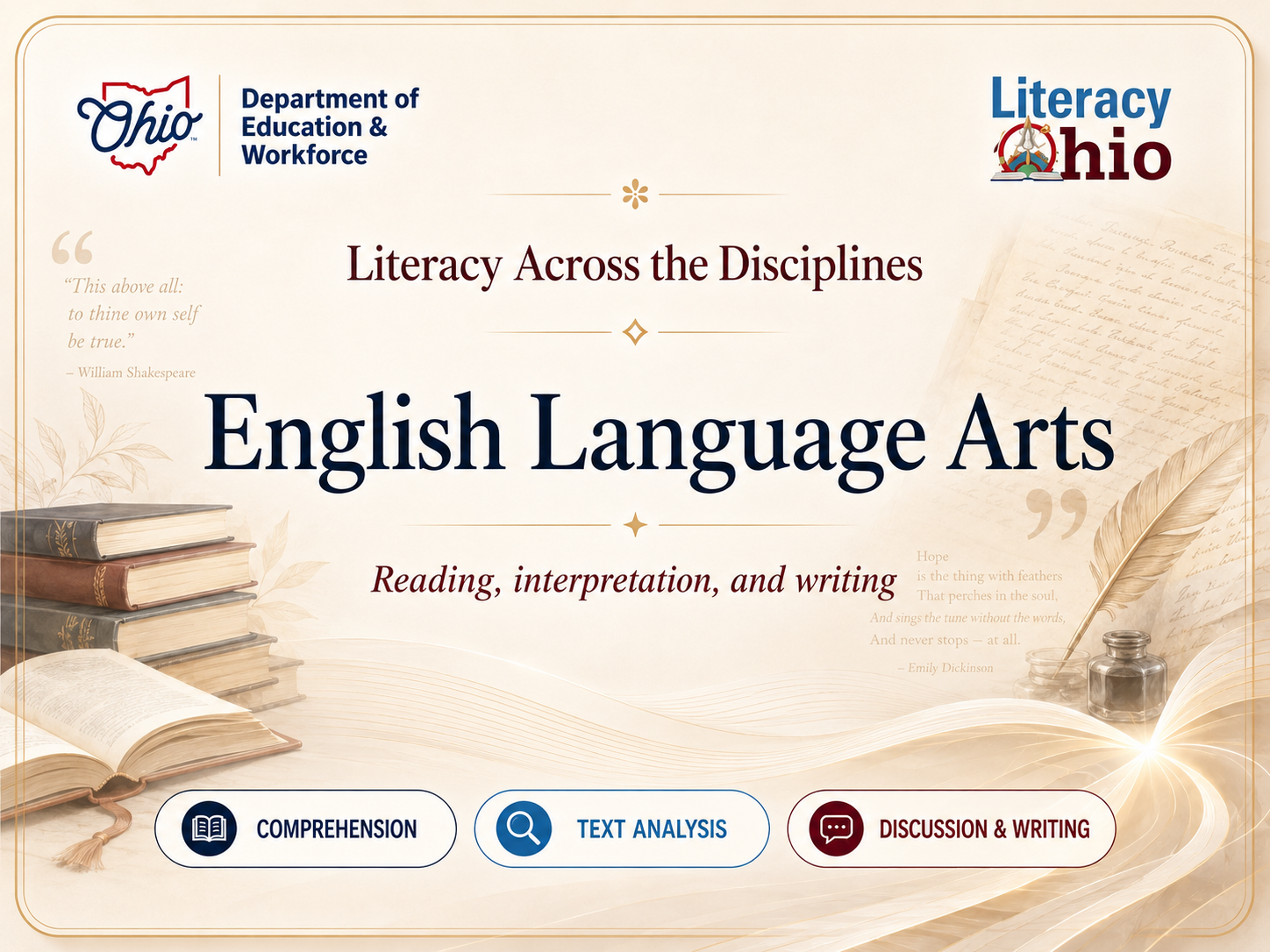
Playable video and right-side resources
Support interpretation, evidence, and disciplinary discussion.
The video shows how ELA teachers can make genre expectations, perspective-taking, academic language, and interpretive argumentation visible without flattening the richness of literary work.
Supporting English Language Arts Literacy
Ohio Literacy Academy on Demand videoThe ELA video emphasizes the wide range of genres, texts, modalities, and interpretive tasks students encounter. It focuses on argumentation, perspective-taking, connective language, text sets, vocabulary nuance, and discussion protocols that help students move from own-side interpretations toward more integrative arguments.
- The literacy demand changes across novels, poems, plays, essays, graphic novels, informational texts, and multimedia text sets.
- Argumentation requires language for weighing evidence, considering alternative interpretations, and connecting ideas across paragraphs.
- Text sets and discussion protocols can give struggling readers entry points while pushing stronger readers toward integration and perspective-taking.
Department reflection
- What kind of interpretation do students need to make in your next unit?
- Which connectives or sentence frames would help them compare interpretations more precisely?
- Where could a short text set or multimodal source deepen the central text rather than distract from it?
Suggested use
Turn the video into one concrete classroom move.
Choose a current text and decide whether students most need support with evidence, perspective-taking, genre knowledge, vocabulary nuance, or discussion norms.
Name the reading move students need to practice: infer motive, compare perspectives, analyze language, evaluate credibility, or support an interpretation with evidence.
As the video discusses argumentation, text sets, vocabulary, and discussion, mark the point that connects most directly to your next lesson.
Use an argumentation sheet, sentence-frame set, annotation signpost, or connective list to make that interpretive move easier to attempt.
Source credit: Ohio Literacy Academy / ReadOhio / Ohio Department of Education and Workforce. This page embeds or links to source materials and companion classroom resources rather than hosting mirrored copies. Resource links are placed next to the relevant video so a content-area teacher can watch, reflect, and open the most useful tools from one place.