Social studies · sourcing · corroboration
Disciplinary Literacy for Social Studies
A focused professional-learning page for social studies teachers on bias, sourcing, contextualization, corroboration, multiple documents, maps, charts, and historical argument.
The supplied Social Studies Drive folder includes the course companion, Ohio PDF, and presentation handout. The page below includes a video placeholder so the correct source video can be dropped in when it is available.
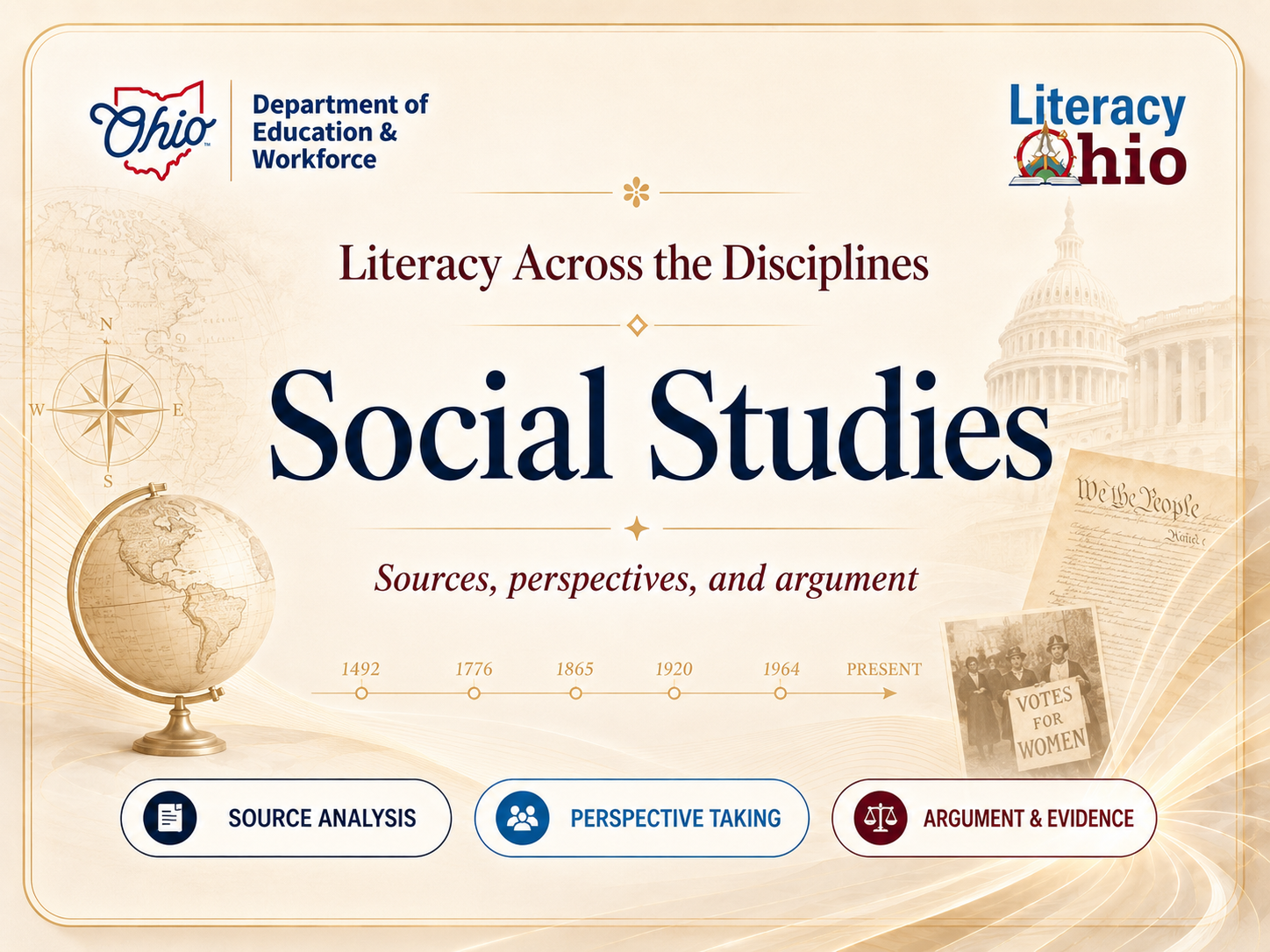
Playable video and right-side resources
Support students as readers of evidence, accounts, and perspectives.
Use the video and companion resources to focus on source analysis, perspective taking, corroboration, and evidence-based argument in social studies classrooms.
Supporting Social Studies Literacy
Ohio Literacy Academy on Demand videoThe Social Studies handout frames disciplinary literacy around identifying bias, untangling conflicting perspectives, corroborating and contextualizing sources, comparing accounts, reading maps/charts/infographics/photos, and using primary and secondary evidence to write historical or social-science explanations.
- Students need explicit support for sourcing, contextualization, corroboration, bias, and evidence use.
- Social studies texts include primary documents, secondary accounts, maps, charts, photographs, timelines, and multimedia sources.
- Writing often requires organizing conflicting ideas, explaining consequences, and using the past as a mirror to the present.
Department reflection
- Which source in your next unit requires the most context before students can read it well?
- What evidence should students use to compare or corroborate two accounts?
- How could Because–But–So help students explain cause, contrast, and consequence?
Suggested use
Turn the video into one concrete classroom move.
Choose one upcoming primary source, map, chart, image, or document set and decide which disciplinary move students need to practice: source, contextualize, corroborate, compare, infer, or build a claim.
Identify whether students are likely to struggle with archaic language, bias, context, source credibility, maps/visuals, or conflicting accounts.
Because the video source was not present in the folder, use the Ohio handout and companion to frame the same watch-reflect-plan structure.
Use annotation signposts, Because–But–So, QAR, or sentence frames to help students explain how evidence supports a historical or social-science claim.
Source credit: Ohio Literacy Academy / ReadOhio / Ohio Department of Education and Workforce. This page embeds or links to source materials and companion classroom resources rather than hosting mirrored copies. Resource links are placed next to the relevant video so a content-area teacher can watch, reflect, and open the most useful tools from one place.